
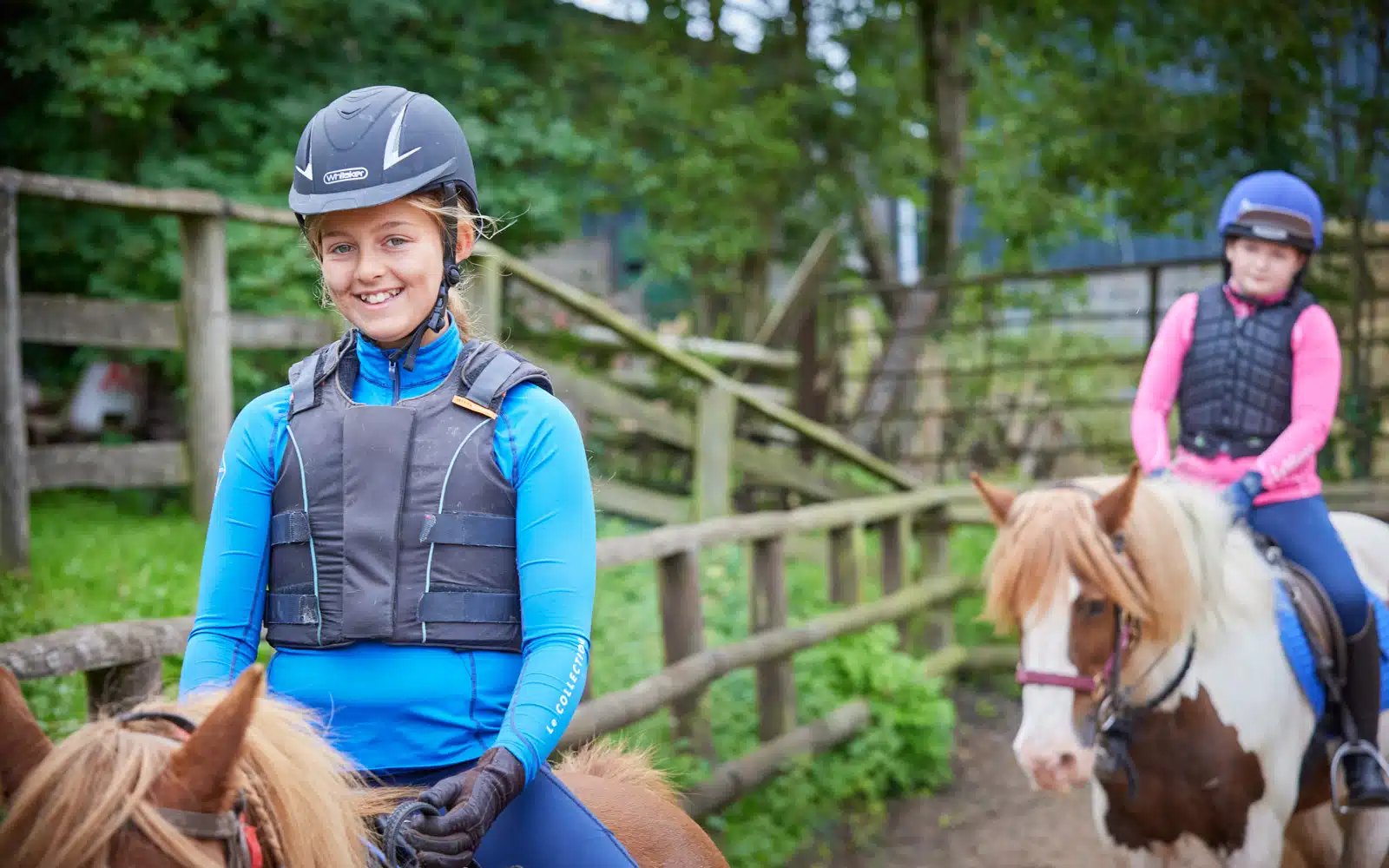
Horse riding is a fun and thrilling activity for kids of all ages. However, like any other sport, it comes with its fair share of challenges. Whether you’re a complete beginner, novice, or intermediate, every rider makes mistakes — and that’s perfectly normal!
With a bit of practice and guidance, young riders can quickly recognise these little slip-ups early on and learn to fix them, which is often key to becoming a safer, happier, and more confident equestrian.
In this guide, we’ll explore six common horse riding mistakes and offer some useful tips on how to avoid them. By the end, your child will understand exactly what to look out for and feel even more prepared the next time they sit in the saddle.
6 Horse riding mistakes
From the moment a rider mounts their horse, there is a lot to think about and do. Below, we’ve outlined some of the most common riding errors, along with practical advice to help you correct them, so every lesson or pony camp adventure can be safer, smoother, and more enjoyable!
1. Wearing the wrong clothing or gear
Before you step into the stable, what you wear can make a huge difference. It’s not about fashion; it’s more about function! Choosing the wrong helmet, footwear, or clothes can make riding not only uncomfortable but also unsafe.
For example, baggy or bulky jumpers could get caught in the saddle or other pieces of equipment, while a floppy hood or scarf might even startle your pony. On the other hand, overly tight jeans or tops will restrict your movement, making it difficult to maintain balance.
Inappropriate footwear, such as trainers, can easily slip through the stirrups, increasing the risk of your foot getting trapped. A poorly fitted helmet can’t protect your head properly in case of a fall, and without gloves, it’ll be harder to keep your hands steady on the reins.
Tips to avoid this mistake:
- Always wear a BSI-standard helmet (ask an expert to check it is fitted correctly).
- Choose riding boots with a smooth, sturdy sole and a small heel.
- Wear fitted trousers or jodhpurs with an inner seam to prevent sores (chafing).
- Pick snug-fitting gloves designed for better grip on the reins.
- Consider a body protector to protect your chest, back and ribs from any bumps or knocks while riding.
2. Holding your breath and tensing up
Have you ever noticed that when you are nervous or concentrating really hard, you unconsciously stop breathing properly? This is a very common mistake that all horse riders (not just beginners) experience, especially when learning something new like jumping for the first time.
When you hold your breath, your muscles automatically tense up — from your shoulders and back right down to your legs. This tension can travel through the saddle and reins, making it difficult to send signals to your horse. As a result, they can often become tense or nervous themselves.
A relaxed rider can move in sync with the horse’s gait (walk, trot, or canter), allowing the horse to move freely. This helps them respond clearly to cues and feel calm, which, in turn, builds trust and understanding.
Tips to avoid this mistake:
- Take a few slow, deep breaths, inhaling through your nose and exhaling through your mouth to release tension.
- Sing a song in your head or hum a quiet tune to stay relaxed. After all, it’s almost impossible to hold your breath while doing this.
- Try box breathing: inhale for four and exhale for four to keep a steady rhythm.
- Shrug your shoulders up and down, then roll them back a few times to loosen any muscle tension.
- Smile! It’s a simple trick to help you relax and enjoy the ride.
3. Incorrect riding posture
Good posture is one of the most important horse riding skills, yet it’s something most beginners often struggle with. Slouching, hunching, and leaning too far forward (or backward) can affect your balance, control, and comfort.
Misalignment leads to muscle strain and fatigue by placing unnecessary pressure on your back, shoulders and core. Moreover, an unstable seat makes riders more prone to tipping or falling off. For the horse, the imbalance may hinder its natural movement, leading to joint and spinal pain.
Having the correct posture helps to distribute your weight evenly in the saddle, enabling you to use your arms and legs effectively to give consistent aids and communicate clearly with your horse.
Tips to avoid this mistake:
- Maintain a straight line from your ear, down to your shoulder, hip and heel.
- Roll your shoulders back and down so they are relaxed and square.
- Bend your elbows slightly and keep them close to your body to absorb any movement.
- Engage your core muscles by gently tightening your tummy and keeping your back straight to stabilise your position on the horse.
- Lift your head up and look ahead towards where you want to go, guiding your pony.
4. Gripping with the knees or thighs
Most new riders get into the habit of gripping the saddle with their knees or thighs, thinking it will help them stay on the horse, or else they’ll surely fall off. But, in fact, it has the exact opposite effect!
While you need contact with your horse, squeezing either the upper or lower leg tightly can make it feel stiff and push you up and out of the saddle. This tight grip can also lift your heels, disrupting that all-important ‘ear-shoulder-hip-heel’ alignment. Plus, your horse may interpret this as a signal to move forward or speed up because the pressure is inconsistent.
A strong, secure seat involves relaxing your thighs and knees, letting your weight sink into your heels. This helps you stay balanced and connected with your horse’s movements, absorb bumps smoothly, and give clear, consistent aids.
Tips to avoid this mistake:
- Keep your heels down and let your legs hang gently against the horse’s sides.
- Use your core strength to stay upright in the saddle, rather than relying on your legs or knees for support.
- Practise riding without stirrups at a walk under your instructor’s supervision to help find your balance.
- Make sure your ankles are flexible, acting as little shock absorbers to each step your horse takes.
- Imagine hugging your pony with your lower legs, staying calm and steady.
5. A loose or tight grip on the reins
Think of the reins as your communication line to the horse’s mouth, carrying every subtle message you send. And they need to be just right — not too tight, but not too loose.
Many inexperienced riders tend to grip the reins too tightly out of fear of losing control; however, this can cause excessive discomfort or pain to the horse. In response, they may exhibit behaviours such as head tossing or rearing up. It also encourages your pony to lean on the bit, dulling its sensitivity to your aids.
On the flip side, a loose grip on the reins will result in a loss of control and make it harder to steer, stop, or guide them accurately. This can lead to confusion, sloppy transitions, or the horse ignoring your cues altogether. Ultimately, the goal is to have a light and steady hold with ‘elastic’ arms that follow the horse’s movements.
Tips to avoid this mistake:
- Hold the reins correctly by feeding them between your pinky and ring finger, with your thumb resting lightly on top.
- Keep your hands about 10-15cm apart (no wider than your horse’s neck).
- Shorten the reins until you can feel a gentle but consistent weight.
- Apply gentle pressure, increasing or releasing as needed, rather than tugging or gripping.
- Ask your instructor to check your hands regularly for the correct amount of tension.
6. Ignoring the horse’s body language
Finally, ignoring the horse’s body language is one of the biggest horse riding mistakes beginners make. Young riders often focus on themselves, forgetting to notice the signals their pony sends through its ears, tail, eyes, and posture.
Signs like pinned-back ears or a swishing tail usually indicate that a horse is feeling angry, frustrated, or irritated. A soft, short snort, on the other hand, shows that they are relaxed, curious, or alert. Even a slow, reluctant pace can be a tell-tale sign that the horse is tired or unsure.
In short, taking the time to ‘read’ their horse and observing how they react to different movements, sounds, or commands helps kids develop a much deeper bond with their pony, leading to a brilliant horse-rider relationship!
Tips to avoid this mistake:
- Check your horse’s ears, eyes, tail, and overall posture to spot the signs.
- Build a horse-rider partnership on the ground by feeding, petting, and grooming your horse.
- Take small breaks during your ride to feel your horse’s movement and see if they are comfortable or need a rest.
- React calmly if they feel tense or uncomfortable, and adjust your cues gently instead of forcing them.
- Talk to or gently reassure your horse while riding, giving soft pats on the neck to show you’re there and that they’re doing a great job.
Improve your horse riding skills and knowledge at PGL!
Our pony camps are perfect for both beginners and intermediate riders who are looking to learn, practice, and have fun with experienced instructors guiding you every step of the way!
You’ll discover how to ride safely, care for your pony, and master essential skills like balance, posture, and rein control. Not only that, kids can enjoy a variety of adventurous activities, including ziplining, archery, canoeing, and more!
We offer horse riding camps at the following UK camp locations:
Book now and let your child embark on a one-of-a-kind horse riding holiday at PGL! Need more information? Get in touch with us today!