
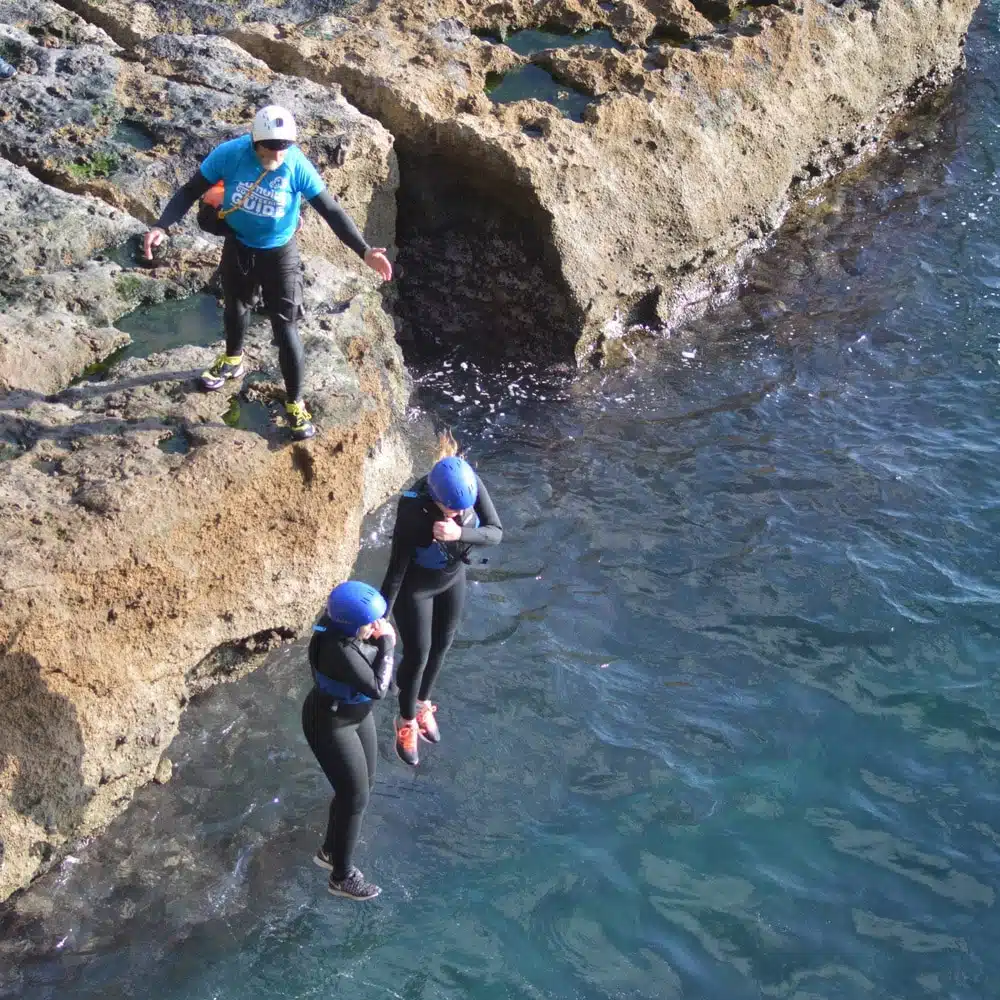
Do you have a thirst for adventure? Or perhaps love being by the sea? Then why not try your hand at coasteering! It’s the ultimate outdoor activity for exploring the beautiful, rugged British coastline like never before.
The best part? You don’t need heaps of knowledge or experience, just a “can-do” attitude. Guided by qualified instructors, adults and kids as young as 8 years old can safely scramble over rocks, peer into hidden caves, and leap into action (literally!).
In this blog, we’ll cover everything you need to know about coasteering, including its origins, the benefits, the equipment you’ll need, and what to expect during a session, so you can face the waves with confidence.
What is coasteering?
Coasteering is an adventurous sport that, according to the National Coasteering Charter (NCC), involves ‘swimming, jumping, scrambling, and or traversing along and in the fore-shore region of a coastline’.
Instead of simply walking along a clifftop path or paddling in the shallows, coasteering is an immersive experience that lets you get up close and personal with nature by clambering over wave-washed rocks, swimming through gullies, riding rapids, and plunging into deep water pools from a height.
The word itself combines ‘coast’ and ‘mountaineering,’ suggesting you’re climbing where the land meets the sea (also known as the intertidal zone), all without the need for boats or surfboards.
Overall, the idea is to work with the tides, the waves, and the rocky contours of the landscape. No two routes are the same because the coastline is constantly changing, making every session a unique and exhilarating challenge for all to participate in!
The history of coasteering
Believe it or not, coasteering is a relatively new activity, but its origins stretch much further back. For centuries, fishermen, foragers, and smugglers traversed their way across the coastline out of necessity to access hidden coves or navigate through difficult terrain long before anyone gave it a name — it was a simple part of everyday life.
By the 20th century, climbers and pioneering figures like A. W. Andrews in Cornwall began to actively pursue traversing the coastline, exploring the base of cliffs using ropes and traditional climbing techniques (e.g., abseiling or belaying) to avoid the water.
In 1973, the term ‘coasteering’ first appeared in the book ‘Sea Cliff Climbing’ by John Cleare and Robin Collomb, who said: “A few enthusiasts believe that coasteering will become popular and has a big future”.
From the 1990s, the sport began to take shape, particularly in Pembrokeshire, Wales. With its dramatic cliff faces and abundant wildlife, Andy Middleton at Twr-y-Felin Outdoor Centre began introducing commercial coasteering to the public, turning it from a niche pursuit into an accessible adventure!
Today, it’s one of the most popular outdoor activities in the country, paying homage to the relationship between man and sea while also giving people the opportunity to discover the UK’s coastline in regions like Cornwall, Anglesey, Scotland, and Dorset at dedicated centres, including on a PGL watersports camp.
Climb, jump, and swim: How does it work?
Coasteering might sound bold and daring — and you’re absolutely right! But it’s a safe and structured activity, led by instructors who know the coastline inside and out, guiding you through each step at a pace that’s suited for you. Here is what you can expect ahead of a coasteering session:
1. Arrival and introduction
Firstly, qualified ‘coasteerers’ will greet you upon arrival, explaining what the sport is and how the session will run. This is your chance to ask questions, voice any concerns, and let the guides know about swimming ability, age, height and confidence levels. It’s all about reassuring participants and making them feel at ease in a new environment, while keeping the focus on fun!
2. Equipment fitting
Next, you’ll be equipped with essential coasteering gear. Having the right kit not only protects you but also helps you feel comfortable when out traversing. Instructors will ensure each piece of equipment fits properly and is secure, so you can move freely, stay warm and enjoy the session, without worrying about slipping straps, baggy wetsuits or bumps along the way!
You’ll need:
- Wetsuit: Keeps you warm in chilly water and provides a layer of protection against scrapes on the rocks.
- Buoyancy aid (or life jacket): Helps you float effortlessly while swimming and boosts confidence, especially for children.
- Helmet: Protects your head from bumps on rocks and rough terrain.
- Footwear: Usually a sturdy pair of shoes, like old trainers or wetsuit boots, to prevent slips and trips.
3. Safety briefing and warm-up*
Now that you’re suited and booted, it’s time for a safety briefing*. Here’s an example of what a standard safety briefing and warm-up typically includes.
Before you even enter the water, Instructors will explain the route, potential hazards (e.g., tidal changes, rockfall, cold water), and how to enter and exit the water safely. They’ll also outline how the waves move and the importance of the ‘buddy system’ to show that help is always nearby if someone needs a hand or reassurance.
In addition, you’ll do a short warm-up on land, stretching your muscles to increase flexibility and prevent strains, while also practising scrambling and climbing techniques. This could involve crawling under low edges, balancing on boulders, or testing buoyancy aids in shallow water.
It might all sound a bit technical at first, but it’s explained in a friendly, down-to-earth way that makes it easy for kids and adults alike to understand, giving you a taste of what’s to come, so that everyone feels ready for the journey ahead.
*Please note: this is a sample safety briefing that our teams will conduct to give you an idea of what to expect. Briefings may vary depending on the third-party supplier, age and activity. For more information, see our watersports camp page.
4. Exploring the coast
Once everyone is comfortable, the coasteering adventure begins! Your instructor will lead the way, choosing a route along the shoreline based on the group’s capabilities, simultaneously monitoring weather and sea conditions. This allows participants to explore at their own pace, with plenty of breaks between activities for wildlife spotting or soaking up the views, while being safe and fully supported.
Below is an overview of the exciting mix of activities you can expect to do on a coasteering session:
Rock scrambling:
An iconic coasteering activity, rock scrambling involves crossing sections of deep water by using your hands and feet to navigate uneven terrain or partly submerged rocks along the coastline. In other words, you are low-level traversing or “rock hopping” just above the water line.
Tips: Keep three points of contact at all times (two feet and one hand, or two hands and one foot). Move slowly and deliberately, looking for stable rocks or even areas with barnacles for extra grip. And don’t worry about falling in — you can always try again!
Sea swimming:
Depending on the route, you’ll also get a chance to swim short distances in the ocean. These are important for getting across deeper water or bypassing areas you can’t scramble over. Plus, with a wetsuit and buoyancy aid, you’ll be able to float and move easily through the water. If you’re lucky, you may experience whirlpools or uncover a hidden cove!
Tips: Maintain a relaxed, horizontal position and use gentle strokes, letting your buoyancy aid do most of the work. If the water gets rough, switch to a defensive swim: float on your back, feet-first, and use light kicks to steer clear of rocks and move safely out of the impact zone.
Cave & cove exploration:
The caves around the coastline are truly a sight to behold! It’s one of the most thrilling aspects of coasteering, where you’ll have the chance to explore shadowy caverns, unique rock formations, and a fantastic array of wildlife, from seagulls to seals.
Tips: Use your hands to guide yourself along the rock walls and counter the pull of the water. Keep your head low and an eye on the ceiling, as sudden swells can lift you unexpectedly. Most of all, always follow your instructor’s directions.
Cliff jumping (optional):
Finally, the most adrenaline-fueled activity in coasteering is cliff jumping! A highlight for many, this involves leaping from various heights off coastal rock ledges or cliff faces into deep pools. Don’t be afraid — jumping is completely optional. You’ll begin with smaller, low-height jumps (around a metre or less) to get comfortable with the sensation, gradually building confidence before attempting higher leaps.
Tips: Stand tall, keep your body straight and jump feet-first with your arms across your chest. Enter the water with knees slightly bent to absorb the impact. After hitting the water, push your feet down to help stabilise yourself and resurface quickly.
Go on a coasteering adventure with PGL!
Explore the UK coastline in a whole new way on an adventurous watersports camp at Osmington Bay, Dorset! Designed specifically for 11–16-year-olds, they’ll have the chance to build confidence, connect with nature, and create unforgettable memories together.
On top of that, your child will also enjoy:
- Three tasty and nutritious meals per day, with plenty of hot and cold options to suit every taste
- Fun evening activities, including campfires, discos, quizzes, and arts and crafts
- Sleepovers with new friends in comfy bedrooms
- 24/7 care and support from our highly trained team
Get in touch with our friendly team for more information.