
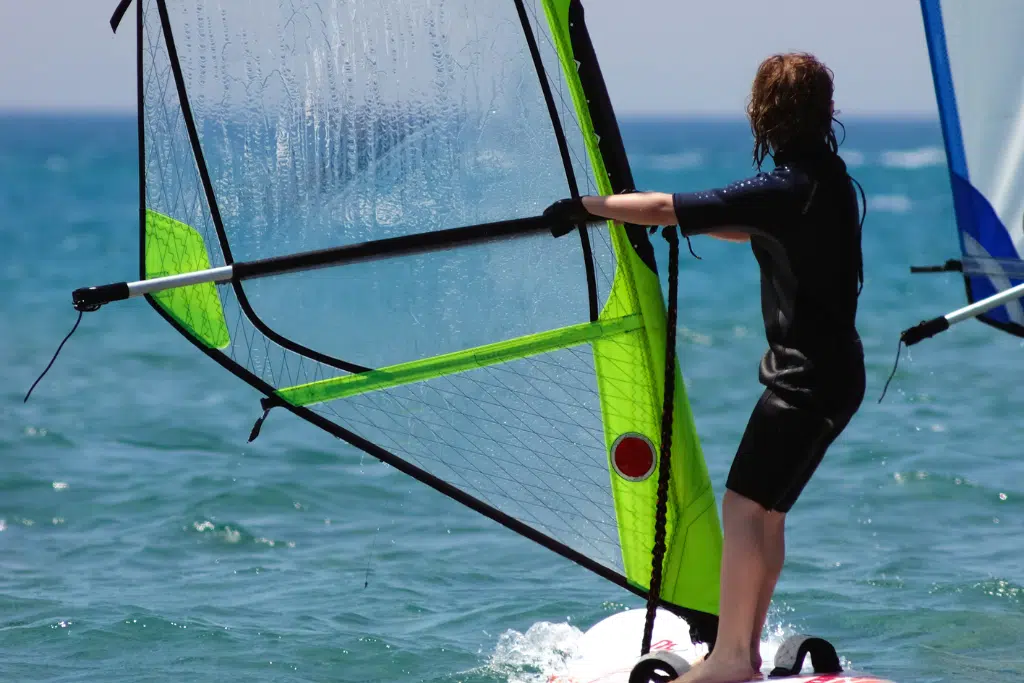
If you’re looking for an adventurous experience during the school holidays, why not try windsurfing? With the waves and air to harness, it’s a brilliant way to have fun outdoors and learn new skills.
Whether you prefer to take things at your own pace or dive straight into the deep end, it is an exhilarating sport that kids of all ages and abilities can do! In this blog, we’ll explain what windsurfing is, why it’s so great, and provide some useful tips for young beginners to get started.
What is windsurfing?
First, let’s discuss in more depth what windsurfing is. Essentially, it combines the balance and thrill of surfing with the control and technique of sailing. A person must stand upright on a large, stable board with a sail attached to a lightweight mast to catch the wind.
Unlike traditional sailboating, which is mainly guided by a rudder and fixed sails, a windsurfer must carefully tilt the sail and shift their weight to steer, change speed and glide across the water. As a diverse watersport, there are a few different disciplines that include competitive and recreational ones, such as:
- Freeride: The most popular recreational form of windsurfing that focuses on fun and improving basic skills in a non-competitive setting.
- Slalom: High-speed racing that requires extreme control and tight turning around a buoy course, often in a figure of eight.
- Windfoiling: This is a newer discipline in which a hydrofoil lifts the board out of the water, reducing drag and allowing surfers to go much faster.
- Freestyle: Performing acrobatic tricks, spins, and jumps on flat water, which are judged on creativity and difficulty.
Reasons to start windsurfing
If you need a good reason to get your children windsurfing, there are plenty! From boosting confidence on the water to improving your physical fitness, not to mention the refreshing escape from everyday life, here are some of the top benefits of windsurfing for kids:
Windsurfing is open to everyone
While it may seem difficult at first, anyone can give windsurfing a go. Even after a few hours of training, most people (both young and old) are able to grasp the basics. That means you can windsurf as a family or with friends, making it the ideal group activity for everyone to get involved with.
Moreover, it’s a year-round sport and there are lots of dedicated locations for windsurfing, from the coastal waves of Cornwall to the stunning lakes of the Cotswolds. Most RYA centres recommend a minimum age of 8 years old, and children must weigh at least 25kg to have the stability to manoeuvre the board, as well as know how to swim.
Builds confidence
Windsurfing takes a lot of practice, but it is a massive confidence-booster for children. Overcoming even the smallest of challenges, such as balancing on the board without falling over or making a smooth turn, teaches kids the value of perseverance and patience.
For children who are already comfortable swimming, the sport takes their confidence in open water to the next level. They learn to observe their environment, make real-time decisions based on wind and tide direction, and take responsibility for themselves, including their own equipment. This self-belief often spills into every other area of their lives, giving them the courage to try new things and trust their instincts.
Improves strength, balance, and coordination
Windsurfing is a full-body workout that feels more like play than exercise, engaging all muscle groups, including your back, legs, arms and core. Standing on the board, holding the boom (the horizontal bar that controls the sail) and steering all contribute to grip strength.
Kids also improve coordination and agility by moving in harmony with the wind and water to respond quickly to changes and navigate the lake or sea confidently. Plus, because the gear is scaled to kids’ sizes, it is a low-impact, enjoyable way to build fitness without being overly strenuous or intense.
An opportunity to socialise
Despite sailing the board solo, windsurfing is a fantastic way to meet people from all backgrounds and become part of a welcoming community that shares a love for the water and a sense of adventure — one of the main reasons why so many sign up to a PGL watersports camp!
The majority of kids learn in groups at local RYA-affiliated centres, sharing the experience of teamwork and communication skills through supporting each other during practice sessions. In short, windsurfing brings people together and allows children to celebrate their achievements, practise, or simply enjoy the water side by side.
A chance to escape into nature
There’s no better way to explore the wonder and natural beauty of the UK than windsurfing! Gliding across calm lakes or the open stretches of the sea exposes kids to fresh air, sunshine and wildlife. They learn to develop a deeper appreciation for the environment, often forming a lifelong connection with nature.
Additionally, you’re free from any notifications or screens; it’s just you, the water and the board, which can be mentally restorative in helping kids relax, focus, and make the most of their time outdoors, boosting their overall wellbeing.
Windsurfing for kids: tips and tricks
If your child is interested in learning to sail, there’s a lot to think about — from selecting the right gear to reading weather conditions. We’ve compiled a list of useful windsurfing tips and tricks to make their first few sessions easy and fun. After all, we want them to love catching those incredible waves!
1. Choose the right gear
First and foremost, it’s important to choose the right gear that suits your child’s weight, height, and skill level. Select a lightweight, shorter, high-volume board (between 60 and 80L) to match their size, weight, and skill level.
These often feature a soft deck made from a spongy foam, such as EVA, to protect children’s knees and shins when they climb back on. The majority of junior boards also have a central daggerboard or fin to prevent them from drifting downwind, as well as footstrap options that can be adjusted to their size. Don’t forget the sail! This should be small (usually 1.5-3m), making it easier to control and handle when out on the water.
If cost is weighing on your mind, most RYA-approved centres, like the Real Outdoor Xperience (Rox) we use for our watersports camps in Wiltshire, provide specialised boards as standard for junior courses, so hiring is often the best option before buying.
2. Safety first
Safety is always a top priority, especially when sailing in open water. Before heading out, make sure your child is equipped with the proper safety equipment and clothing. This includes a well-fitted wetsuit (4/3mm or 5/4mm) to keep them warm and comfortable without restricting their movement. Other essentials include a buoyancy aid, water shoes, and a helmet for extra protection.
Always check the weather forecast, wind strength and tide times. For young beginners, aim for a light wind between 5 and 12 knots; anything higher becomes unpredictable and potentially hazardous. Look out for the RNLI’s orange windsock, which indicates strong offshore winds. When launching, sheltered, shallow waters are best for practising in a safe and manageable setting.
Most importantly, ensure your child learns with a RYA-qualified instructor, who is trained to deliver safe, age-appropriate lessons on windsurfing basics, water safety, and more, while keeping a close eye on conditions.
3. Understand wind direction
Knowing the direction of the wind is a valuable skill every windsurfer must learn. Kids don’t need to become experts straight away, but understanding where it’s coming from and how strong it is makes all the difference.
Before hitting the water, simply standing on the beach and feeling the breeze on their face, or looking at a windsock/flag, to see which way it’s blowing can help kids build a greater awareness of wind direction. To follow, explain the “no-go zone”: an area of approximately 45 degrees in which no one can sail. It’s equally important to teach them which angles allow the sail to catch the wind, such as sailing across the wind.
Over time, they’ll start to grow more confident and naturally become more in-tune with the water, learning to read the waves, feel subtle changes in the wind, and adjust their movements accordingly.
4. Balance is key
Balancing on the board is fundamental to successfully windsurfing. To start, have your child practice standing on the board on land to get a feel of it before entering the water. One simple and effective position for beginners to stay centred is the “L Stance”.
With their feet shoulder-width apart, one foot points towards the nose of the board, whilst the other is placed further back and positioned across it, creating an L shape. The key parts of this stance are bending the knees to absorb any small waves or gusts, keeping the body relaxed and far less wobbly. Another good windsurfing tip is encouraging young surfers to keep their eyes forward, rather than down at their feet, as this helps the body steady itself.
Quickly, they’ll discover how subtle shifts in weight affect the board’s direction, teaching them to work with the water, not against it. Once the balance clicks into place, everything else from steering to turning becomes a breeze.
5. Don’t be afraid to get wet!
One of the most important tips for young windsurfers is simple: don’t be afraid to fall in! Getting wet is all part of the fun and learning process. In fact, everyone, from beginners to seasoned experts, spends time in the water.
Think of falling in not as a setback, but as an opportunity to understand how the board reacts, how the sail behaves and practice the uphaul (lifting the sail out of the water). This is the most crucial strength and muscle-memory exercise that teaches windsurfers how to climb back onto the board, manage the rig, and start again. Over time, they’ll fall less often, but those early tumbles are vital for developing patience and problem-solving skills.
With a buoyancy aid, well-fitted wetsuit, and expert guidance, kids can relax knowing they are supported. Every splash, wobble and accidental dunk is a chance to learn, laugh and build resilience!
Ride the waves on a PGL watersports camp!
We hope these windsurfing tips have been helpful! If your child is eager to build their confidence on the water, learn new skills and spend their school holidays outdoors, our watersports camp is the perfect place to start.
Designed specifically for 11–16-year-olds, they’ll have the chance to try a range of exciting activities and, of course, watersports, all led by qualified instructors at stunning UK locations.
Book now and make a splash at PGL! Need more information? Get in touch with us today.